









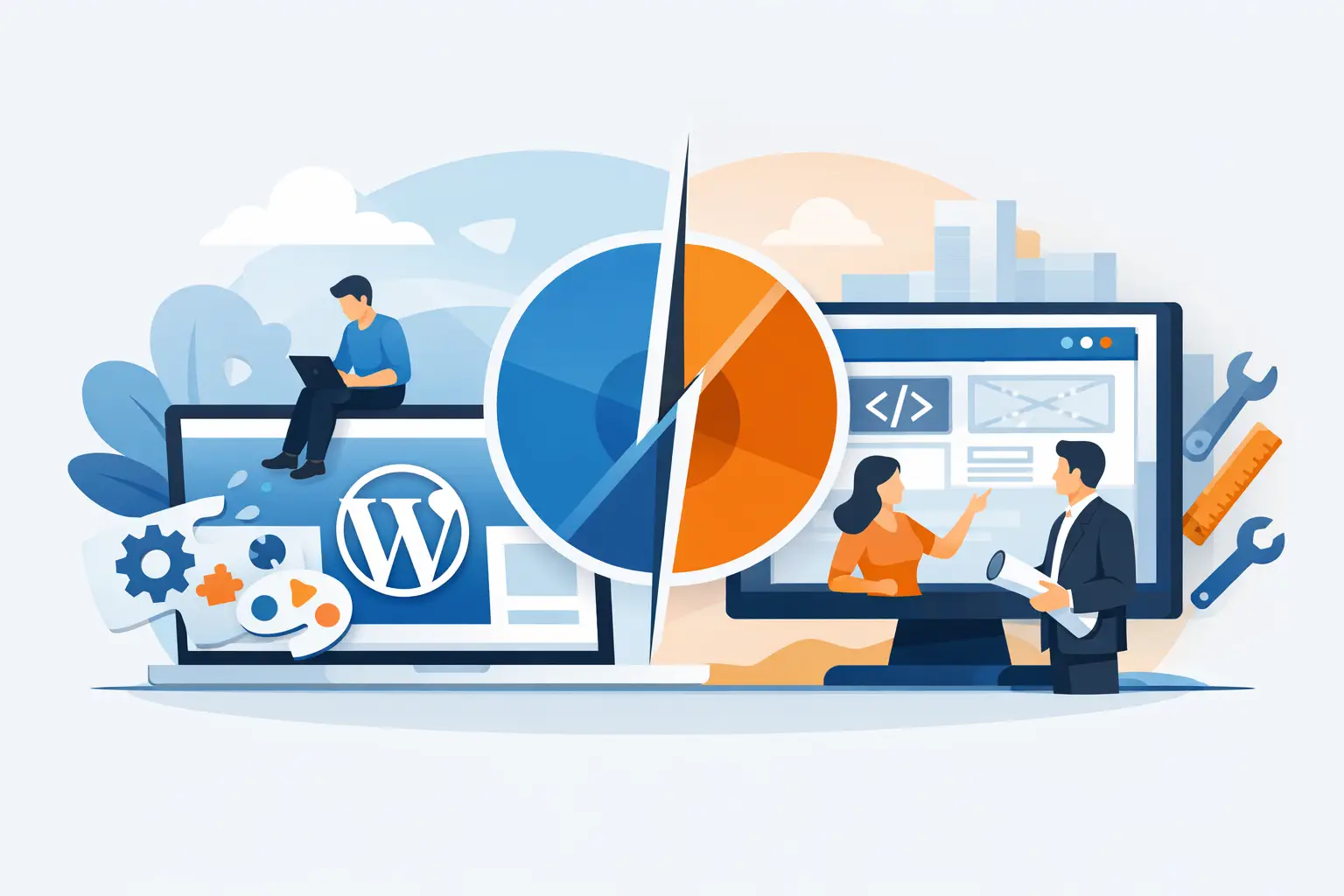
A website that looks polished but is difficult to update, slow to load, or disconnected from how your team works becomes another operational problem. Choosing between a WordPress or custom business website is rarely just a design decision. It affects how quickly you can publish updates, capture leads, support customers, and adapt as your business grows.
For many Utah small and midsize businesses, the better choice is not the platform with the most impressive technical description. It is the one that gives your team the right balance of control, reliability, cost, and long-term support.
WordPress or Custom Business Website: Start With Operations
Before comparing features, look at what the website needs to do for your business. A local service company may need clear service pages, strong calls to action, online forms, reviews, and a simple way to post project updates. A growing company may need customer logins, integrations with internal systems, specialized quoting tools, or a workflow that does not fit inside an off-the-shelf setup.
Those are very different requirements. A WordPress site can be an effective business tool when it is planned well, built with quality components, and maintained properly. A custom website can be the better investment when the site needs to support a unique process or carry out work that standard tools cannot handle well.
The question is not whether WordPress is good or custom development is better. Both can produce a fast, professional, conversion-focused site. The decision comes down to what your business needs now, what it is likely to need next, and who will be responsible for keeping it working.
When WordPress Is the Practical Choice
WordPress is a strong fit for many business websites because it gives nontechnical teams a familiar way to manage content. Staff can update service descriptions, add locations, publish announcements, replace photos, and make basic page edits without asking a developer to change every line of text.
That flexibility is valuable when your website is primarily a marketing and lead-generation asset. If your main goals are to explain your services, establish credibility, attract local search traffic, and turn visitors into phone calls or form submissions, WordPress can provide what you need without the cost of building every feature from scratch.
A well-built WordPress site should not feel generic. It can use a custom visual design, organized page templates, carefully selected functionality, and a content structure built around how customers actually search and make decisions. The platform is simply the content management system behind the site.
WordPress also works well when speed matters. A business that needs a new site, a redesign, or a campaign landing page on a reasonable timeline can often get there faster with WordPress than with a fully custom build. That can make a meaningful difference when an outdated website is costing leads or creating confusion for customers.
The trade-off is maintenance. WordPress relies on software updates, themes, plugins, hosting, security controls, and backups. Installing too many plugins or choosing poorly maintained ones can create performance issues and security concerns. A WordPress site needs an owner, whether that is an internal team member or a dependable technology partner, who can keep its moving parts current.
When a Custom Business Website Makes More Sense
A custom business website is usually the right choice when the website is more than a marketing brochure. If it needs to manage a specialized workflow, connect deeply to another system, present complex account information, or give customers a tailored portal, custom development may provide a cleaner and more reliable path.
For example, a company might need customers to submit information that triggers internal approvals, generates documents, routes requests to specific departments, and updates a business system. Trying to force that process into several unrelated plugins can lead to a fragile setup that is hard to troubleshoot. A custom application or website feature can be designed around the actual workflow instead.
Custom development also provides greater control over performance, user experience, and future changes. Rather than working around the limits of a prebuilt theme or plugin, the site can be shaped around your brand, customer journey, and operational needs. This is especially useful for businesses with unusual service models, multiple user roles, or proprietary processes that create a competitive advantage.
The trade-off is a higher upfront investment and a greater need for clear planning. Custom work takes time because each function needs to be defined, designed, developed, tested, and supported. It is not automatically the smarter choice just because it is more specialized. A custom feature that solves no meaningful business problem is still an unnecessary expense.
Consider the Total Cost, Not Just the Build Price
The lowest initial quote is not always the least expensive option over time. A cheap website may rely on an outdated theme, overloaded plugins, weak hosting, or a setup that no one knows how to support. When something breaks, your team can lose time finding the right vendor, recovering access, and repairing a system that was not built for long-term use.
With WordPress, ongoing costs typically include hosting, security, backups, software updates, and support for content or functionality changes. These costs are predictable when the site is maintained regularly. They become harder to manage when updates are ignored until a problem appears.
With a custom website, the initial development cost is usually higher, but it may reduce manual work or eliminate disconnected systems. If a custom customer portal saves staff several hours each week, reduces data entry errors, or gives clients faster access to information, its value should be measured against those operational gains rather than its development price alone.
In either case, ask who owns the site, where it is hosted, how backups work, who has administrator access, and what happens when you need help. A business website should not depend on one unavailable freelancer or a vendor that cannot respond when an issue affects leads or customer service.
Choose Based on What Must Be Easy
A useful way to make the decision is to identify what must be easy for your business. If frequent content changes need to be handled by office staff, WordPress may be the practical answer. If a customer needs to complete a highly specific process online, a custom solution may be worth the investment.
Think about your next two years, not just launch day. Will you add locations, service lines, staff members, online resources, integrations, or client accounts? Are you trying to reduce phone calls and emails by giving customers better self-service options? These questions reveal whether you need a flexible marketing platform, a tailored digital tool, or a combination of both.
Many businesses do not need to choose one extreme. A WordPress website can serve as the public-facing marketing site while custom components handle specialized forms, internal dashboards, portals, or integrations. This approach can preserve the convenience of content management while giving your business the functionality that standard website tools cannot provide.
Support Is Part of the Website Decision
A website is not finished when it launches. It needs updates, monitoring, content improvements, technical troubleshooting, and occasional changes as the business evolves. That is why web decisions should connect to your broader technology support plan.
Set IT Solutions helps businesses look beyond the launch date by considering the website, the people who manage it, and the systems it may need to connect with. When one team can support your day-to-day technology and your digital presence, issues are easier to diagnose and improvements are easier to coordinate.
The best website is the one your team can keep useful. Choose the platform that supports your customers, fits your workflows, and gives you a clear path for reliable help when the business changes.