









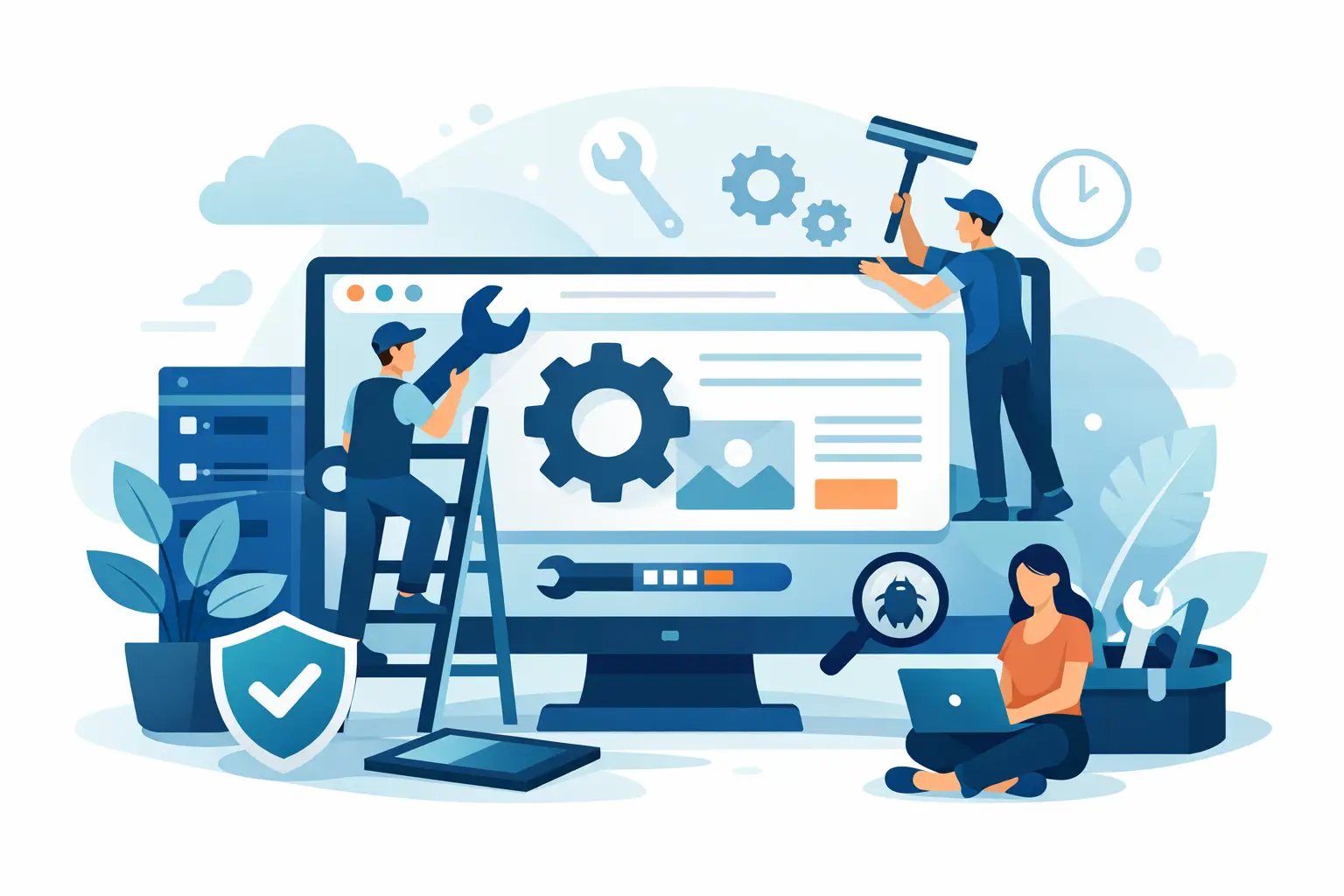
A small business website rarely fails all at once. More often, it slips. A contact form stops sending. A plugin update breaks a page layout. A staff member changes hours, but the homepage still shows last season’s schedule. Little issues pile up until customers notice and your team is left reacting instead of operating smoothly.
That is why website maintenance for small business is not a side task. It is part of keeping the business visible, credible, and easy to work with. If your website helps generate leads, answer questions, support customers, or move people toward a call or appointment, it needs consistent attention just like any other business system.
What website maintenance for small business actually includes
For many business owners, website maintenance sounds like a technical line item. In practice, it is a mix of protection, performance, and business upkeep. Some tasks are behind the scenes, such as software updates, backups, uptime monitoring, and security checks. Others are customer-facing, like fixing broken links, updating service pages, replacing outdated team information, or improving a page that is not converting.
A healthy website is not just online. It loads properly, works on mobile devices, reflects your current business, and gives customers confidence that your company is active and reliable. That matters whether you run a local service business, a professional office, a retailer, or a growing company with a more complex sales process.
The exact maintenance workload depends on the type of website you have. A simple brochure site may need lighter support than a WordPress site with multiple plugins, online forms, appointment tools, customer portals, or ecommerce features. The more moving parts you have, the more likely small issues will affect operations.
Why maintenance gets ignored until it becomes expensive
Most small businesses do not ignore their websites on purpose. The problem is bandwidth. The person managing operations is also handling vendors, payroll, customers, and internal issues. The owner knows the website matters, but it is hard to prioritize preventive work when nothing appears broken.
The catch is that websites age quietly. Security risks grow when updates are delayed. Search visibility can weaken when content gets stale or technical errors stack up. Conversion rates can drop if page speed slows down or forms stop working consistently. By the time the problem is obvious, the cost is usually higher than the cost of regular upkeep.
There is also a vendor gap that creates friction. One provider built the site, another hosts it, a third handles email, and no one really owns the day-to-day responsibility. When something goes wrong, your team spends time chasing answers instead of getting a fix.
The business risks of poor website maintenance
The first risk is lost trust. Customers may not know why a website feels off, but they notice outdated information, broken pages, and slow load times. If your site looks neglected, some will assume your service is the same.
The second risk is missed revenue. A website does not need to be completely down to cost you leads. If your quote request form fails, if your mobile menu is hard to use, or if your call-to-action is buried under outdated content, good prospects can leave without contacting you.
The third risk is operational disruption. Businesses often rely on their websites for customer communication, scheduling, onboarding, or internal workflows. A website issue can quickly become a staff issue, a customer service issue, or a reputation issue.
Security is the most serious concern. Outdated themes, plugins, and content management systems can create vulnerabilities. Small businesses are not too small to be targeted. In many cases, they are targeted because they are easier to breach.
What a practical maintenance routine looks like
The best maintenance plan is not the most complicated one. It is the one your business will actually keep up with. At a minimum, most small businesses should have routine software updates, dependable backups, security monitoring, and periodic testing of critical functions like forms, checkout flows, and mobile responsiveness.
Content should also be reviewed on a schedule. That includes service descriptions, pricing language if applicable, staff information, testimonials, location details, and any seasonal promotions. If a customer finds conflicting information on your site, your team may end up correcting confusion that could have been avoided.
Performance checks matter too. A site that gets slower over time often does so because of unchecked plugins, oversized images, theme issues, or script conflicts. Speed problems affect user experience, but they also affect how many people stay long enough to take action.
For some businesses, monthly maintenance is enough. For others, especially those with frequent updates or customer-facing functionality, ongoing monitoring is a better fit. It depends on how much your website does for the business and how costly downtime would be.
When to handle it internally and when to outsource
There is no single right answer. If your site is very simple and someone on your team is comfortable managing updates, testing key pages, and handling basic content changes, internal maintenance may be workable. That can be a reasonable option for a small site with limited functionality.
The trade-off is consistency. Internal maintenance often gets pushed aside when operations get busy. It can also become risky if the person doing it is not familiar with plugin conflicts, backup procedures, or recovery steps when an update goes wrong.
Outsourcing makes more sense when the website plays an active role in lead generation or customer service, when multiple systems are connected, or when your business needs fast response if something breaks. It also helps when you want one team that can look beyond basic updates and spot opportunities to improve usability, conversion, and overall reliability.
That is where a practical partner matters. A provider that understands both technical support and business websites can solve issues faster because they are not treating the website as an isolated asset. They are looking at how it supports operations, customer experience, and growth.
How to tell if your site needs more than occasional updates
If you are only touching the website when a major issue appears, that is usually a sign your process is too reactive. Another red flag is when your team is unsure who is responsible for updates, hosting coordination, plugin licensing, backups, or form testing.
You may also need stronger maintenance if your website has become harder to edit, if pages look inconsistent, if mobile performance is uneven, or if you have launched new services without properly updating the site structure. Businesses change quickly. Websites that are not maintained start describing a version of the company that no longer exists.
A drop in leads is another signal, although it is not always caused by traffic. Sometimes the issue is simple. A broken button, poor page speed, outdated calls to action, or confusing content can reduce response rates even when people are still finding the site.
What small businesses should expect from a maintenance partner
Good website support should not feel vague. You should know what is being monitored, how often updates are handled, how backups are managed, and what happens if there is a problem. Responsiveness matters because website issues rarely arrive at convenient times.
You should also expect practical communication. If something needs attention, the explanation should be clear and tied to business impact. Most owners and office managers do not need a technical lecture. They need to know what is wrong, what it affects, and what the next step is.
The strongest support relationships also create continuity. Instead of working with one company for IT issues, another for website fixes, and another for design adjustments, many businesses benefit from having a single team that can keep digital systems aligned. For Utah companies that want that kind of day-to-day reliability, Set IT Solutions fits naturally because the work is built around practical support, website performance, and keeping business technology useful rather than burdensome.
Maintenance is not separate from growth
A website redesign gets attention because it feels like progress. Maintenance feels quieter, but it often has a more immediate effect on performance. A site that is current, fast, secure, and accurate gives your marketing a better chance to work. It helps your staff avoid unnecessary friction. It gives customers fewer reasons to hesitate.
That is the real value of consistent website maintenance for small business. It protects what you have already invested in and makes the website a more dependable part of how your business runs. If your site is supposed to support sales, service, and credibility, treating maintenance as ongoing operational support is usually the smartest move you can make.