









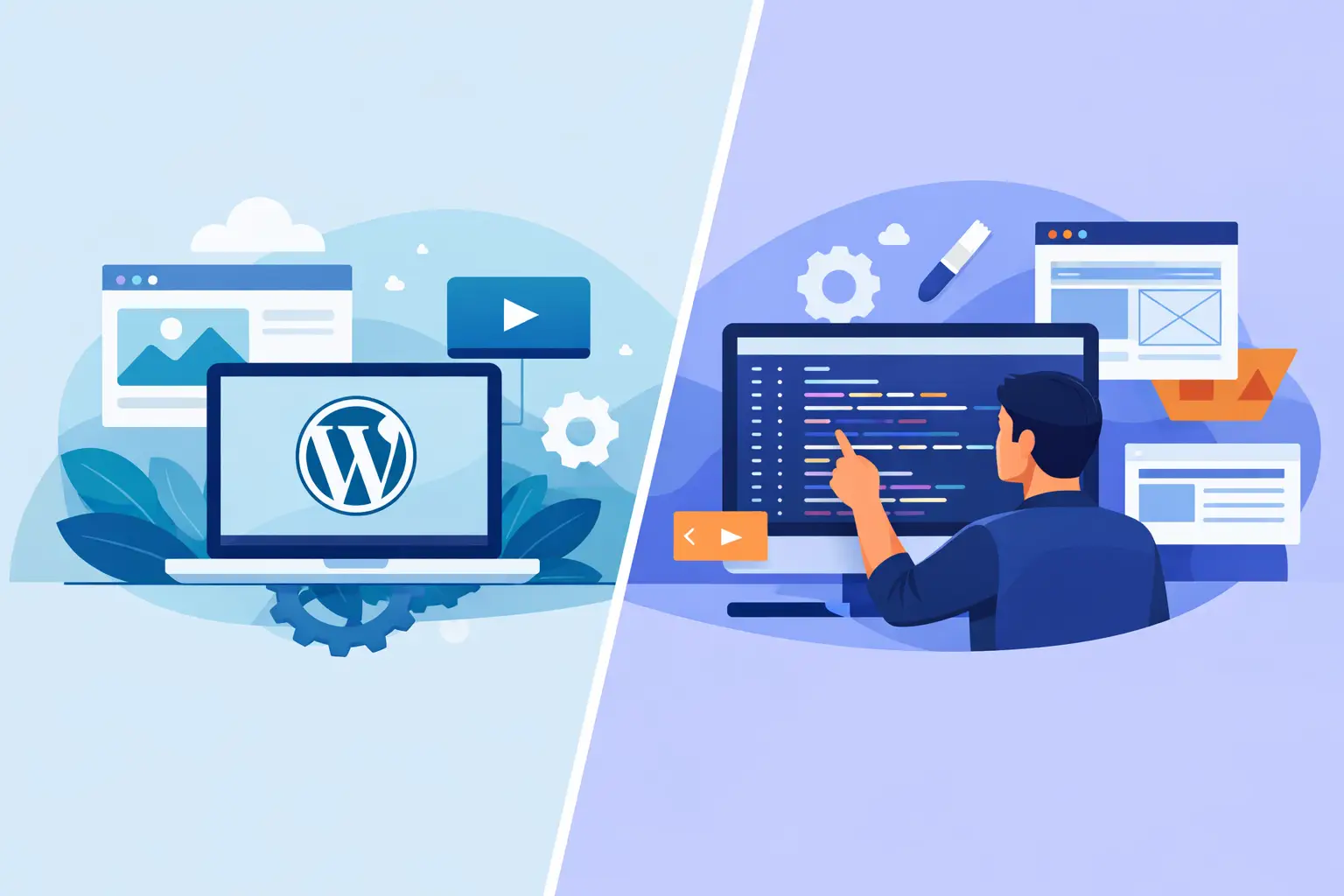
If your website is overdue for a rebuild, the real question usually is not whether you need a new site. It is whether a wordpress site or custom website makes more sense for how your business actually operates. That decision affects budget, launch timeline, editing flexibility, lead generation, support needs, and how easily your site can grow with the rest of your systems.
For small and midsize businesses, this is rarely a purely technical choice. It is an operational one. A website is often tied to marketing, customer inquiries, hiring, scheduling, internal workflows, and day-to-day credibility. The right choice is the one that supports those functions without creating unnecessary cost or complexity.
How to think about a wordpress site or custom website
A WordPress site is built on a widely used content management system. In practical terms, that usually means faster development, easier content editing, and lower upfront cost than a fully custom build. It is a strong fit for many business websites, especially when the goal is to launch a professional site that can be updated without relying on a developer for every small change.
A custom website is built more specifically around your business requirements. That can mean custom functionality, unique user experiences, integration with internal tools, customer portals, specialized workflows, or a backend tailored to how your team works. It offers more control, but it also usually requires more planning, more development time, and a larger budget.
Neither option is automatically better. The better option depends on what your business needs the site to do in the next 12 to 36 months.
When a WordPress site is the smart business choice
For many companies, WordPress is the most practical answer because it covers the majority of business website needs without overbuilding. If your site needs to present services, capture leads, support local SEO, publish content, show portfolios or case studies, and give your team the ability to make updates, WordPress often checks all the boxes.
It also makes sense when speed matters. If your current site is outdated, difficult to edit, or underperforming, a WordPress build can often get you to a stronger web presence more quickly than a custom project. That matters when your website is costing you leads, creating confusion for customers, or reflecting poorly on your business.
Another advantage is support continuity. Because WordPress is familiar to many developers and support teams, it is generally easier to maintain over time. You are less likely to be locked into one highly specialized setup that only one developer understands. For a business owner or operations manager, that reduces risk.
That said, WordPress still needs to be built correctly. A poorly planned WordPress site can become cluttered with unnecessary plugins, inconsistent design decisions, and maintenance issues. The platform is flexible, but flexibility without discipline can create problems later.
When a custom website is worth the investment
A custom website becomes more attractive when your requirements go well beyond standard marketing pages. If your site needs to support account-based access, user-specific dashboards, advanced quoting tools, scheduling logic, application workflows, customer portals, or integration with business systems, a custom build may be the more responsible option.
This is especially true when your website is not just a marketing asset but part of your operations. Some businesses need a website to do real work, not just explain services. In those cases, forcing everything into WordPress can create limitations, patchwork workarounds, or performance issues.
A custom website can also make sense if your business has highly specific branding, customer interactions, or internal processes that a standard content management setup will not support well. The benefit is alignment. The site is built around your workflow instead of your workflow bending around the platform.
The trade-off is that custom projects usually involve more discovery, more coordination, and more long-term planning. They can absolutely deliver strong value, but they are less forgiving when requirements are unclear or when internal decision-making is slow.
Budget, timeline, and maintenance matter more than most businesses expect
Budget is often the first filter, but it should not be the only one. A lower upfront cost can still become expensive if the site needs frequent fixes, cannot support your sales process, or has to be rebuilt again in a year. On the other hand, paying for a custom build too early can tie up budget that would be better spent on marketing, support, or operational improvements.
Timeline matters too. If your team needs a modern website live soon, WordPress often gives you a faster path. That speed can have real business value if your current site is outdated, broken on mobile, or not converting visitors into leads.
Maintenance is where many decisions become clearer. A business website is never truly finished. Content changes, services evolve, software updates happen, and security needs attention. If your team wants the ability to make routine edits internally, WordPress is often easier to manage. If your site includes more advanced functionality, a custom setup may still be the right choice, but it should come with dependable support.
The real question is what your website needs to do
A business website usually has a job. It may need to bring in leads, support recruiting, reduce phone friction, answer common questions, or connect with tools your team already uses. The clearer that job is, the easier it becomes to decide between a wordpress site or custom website.
If the primary goal is credibility, visibility, and lead generation, a well-built WordPress site is often the right answer. If the website needs to function more like a business application, custom development becomes more justified.
This is where many businesses go wrong. They compare platforms instead of comparing business requirements. They focus on whether something sounds modern, flexible, or advanced instead of asking whether it will help the company operate more effectively.
Common cases where WordPress is enough
A lot of businesses assume custom means better. In practice, many websites do not need custom development at all. Service companies, local businesses, professional firms, contractors, medical practices, and growing teams often do very well with WordPress when the site is planned properly.
If you need strong page structure, mobile responsiveness, contact forms, location pages, service pages, blog content, simple integrations, and a site your team can update, WordPress is usually enough. More importantly, it is often the more efficient choice.
That does not mean basic. A WordPress site can still be polished, fast, conversion-focused, and aligned with your brand. The difference is that the foundation is more standardized, which often improves cost control and supportability.
Common cases where custom is the safer route
If your business relies on specialized digital workflows, the safer route may be to build around those workflows from the start. That includes businesses with client logins, gated content systems, custom calculators, layered permissions, complex intake processes, or integrations that affect operations directly.
In those situations, a custom website is less about having something flashy and more about avoiding future constraints. Trying to stitch together too many plugins or force advanced functions into a platform not designed for them can create a fragile system. That kind of fragility shows up later as downtime, user confusion, and support headaches.
A custom build can also improve accountability when paired with ongoing support. If one team understands both the website and the supporting business systems around it, issues get solved faster and changes are easier to coordinate.
Choosing the right partner matters as much as choosing the platform
A good website decision is not just about technology. It is about whether the team building and supporting the site understands how your business runs. The right partner will ask about your sales process, internal bottlenecks, staffing capacity, content ownership, and support expectations before recommending a platform.
That matters because the wrong build can create dependency, confusion, or maintenance burdens your team did not expect. The right build should feel manageable. It should support your business goals, fit your budget, and come with a realistic plan for updates and support after launch.
For many Utah businesses, that means working with a team that can look at the website as part of a larger technology picture. If your website connects to support needs, internal workflows, design consistency, or future app functionality, it helps to have one accountable partner rather than separate vendors. That is often where a practical team like Set IT Solutions can add value – not just by building a site, but by helping the business choose the right level of complexity in the first place.
So which one should you choose?
Choose WordPress if your business needs a professional, reliable, editable website focused on visibility, credibility, and lead generation. Choose custom if your website needs to support unique workflows, advanced functionality, or system-level business operations.
If you are unsure, that usually means you need a requirements conversation before you need a platform decision. A good website should make your business easier to run, easier to trust, and easier to grow. Start there, and the right path becomes much clearer.