









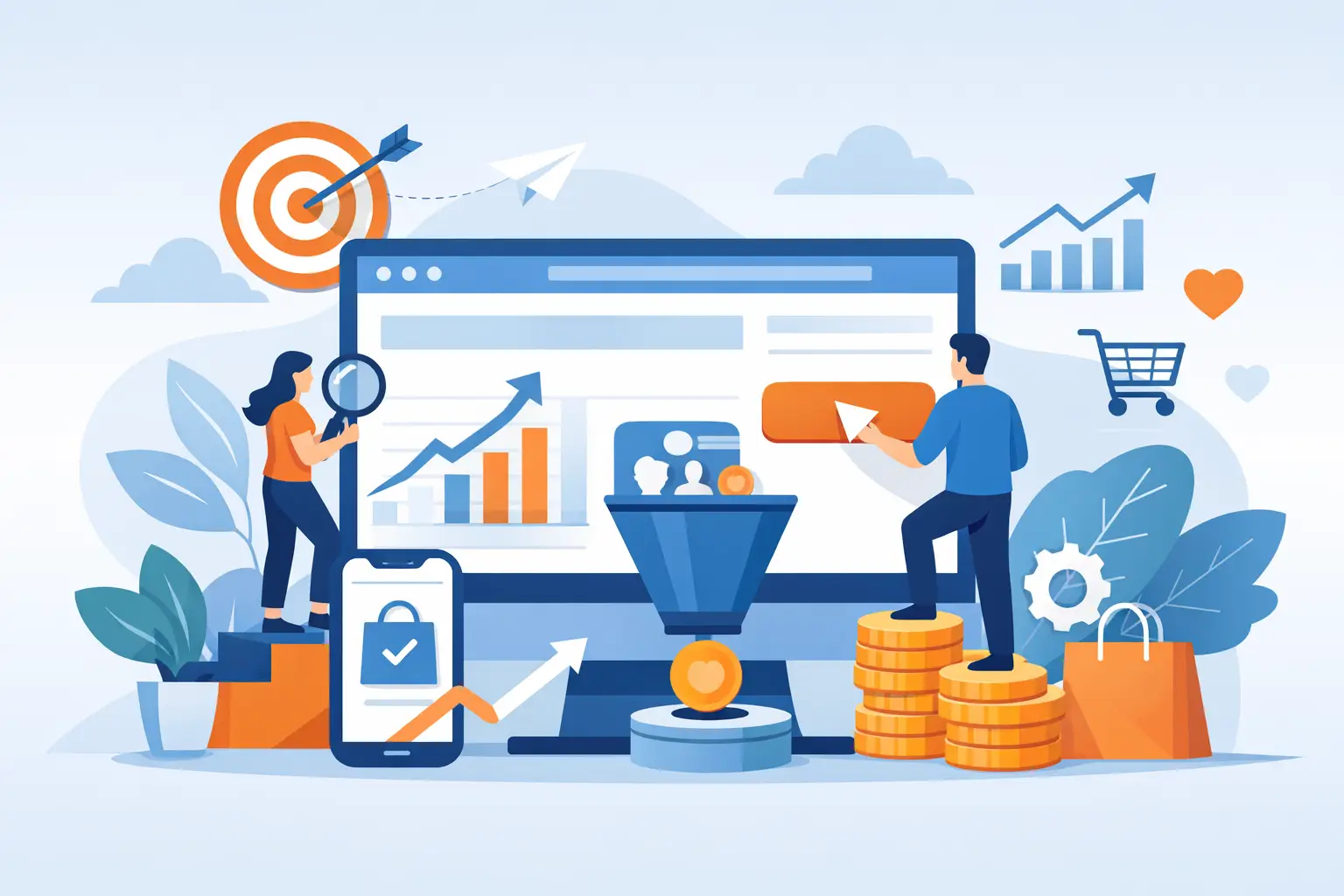
A lot of business websites look fine at a glance and still fail where it counts. They load, they show services, and they check the basic boxes. But if they are not generating calls, form submissions, quote requests, or appointments, they are not doing much for the business. That is the difference with conversion focused websites. They are built to help visitors take the next step instead of leaving without action.
For small and midsize businesses, that distinction matters. Most companies are not trying to impress a design gallery. They need a website that supports sales, answers common questions, builds trust quickly, and makes it easy for a customer to reach out. A site can look modern and still underperform if the message is unclear, the layout creates friction, or the calls to action are buried.
What conversion focused websites actually prioritize
Conversion focused websites are designed around business outcomes. That usually means more qualified leads, more booked consultations, more contact form submissions, or more direct calls from people who are ready to buy. The goal is not simply traffic. It is useful traffic that turns into business activity.
That changes how the site gets planned. Instead of starting with style preferences alone, the process starts with questions like: What action should a visitor take? What information do they need before they trust the company? What objections are likely to slow them down? Where are they getting confused or dropping off?
A conversion-focused approach usually leads to clearer page structure, stronger service messaging, more visible calls to action, and fewer unnecessary distractions. It also tends to improve internal efficiency. When the website answers the right questions up front, teams spend less time chasing vague inquiries or responding to people who were never a fit.
Why many business websites underperform
Most underperforming sites do not fail because of one major issue. They fail because of several smaller problems working together. The homepage tries to say too much. The service pages are vague. The contact button is hard to find. The mobile experience feels cramped. The site may even be visually polished, but it does not guide visitors through a decision.
This is common when businesses treat the website like a brochure instead of an active business tool. A brochure explains who you are. A working website should also help a customer decide, feel confident, and act.
There is also a vendor problem that many businesses run into. One team handles design, another manages hosting, another handles technical support, and no one owns overall performance. That creates delays and missed opportunities. If something breaks, response is slow. If conversions are low, no one is looking at the full picture.
The core elements of conversion focused websites
Clear messaging is usually the first thing to fix. When someone lands on your website, they should understand what you do, who you help, and what to do next within a few seconds. If the headline is too clever or too broad, visitors have to work too hard to figure it out.
Strong calls to action matter just as much. If the next step is a consultation, request form, quote, or phone call, that action should be obvious throughout the site. Many businesses make the mistake of asking too little or asking too late. A website should not be aggressive, but it should be direct.
Trust also plays a major role. Visitors want signs that your company is real, responsive, and capable. That may come from testimonials, clear service descriptions, photos of your team, examples of your work, or a well-written process that sets expectations. In many industries, trust is what moves a visitor from browsing to contacting.
Usability is another major factor. If the website is slow, hard to navigate, or frustrating on mobile, visitors leave. This is not just a design issue. It affects revenue. A site that looks good but creates friction is still a weak business asset.
Conversion focused websites are not just about design
Design matters, but not in isolation. Good design supports clarity, hierarchy, and confidence. It helps visitors notice the right information in the right order. It reinforces professionalism. But design alone does not create conversions.
For example, a beautiful page with vague copy can still underperform. A polished homepage with no clear service breakdown can still confuse buyers. Even a modern layout can lose leads if forms are too long or if the contact process feels uncertain.
That is why the better question is not, “Does the website look better?” It is, “Does the website make it easier for the right customer to take action?”
Sometimes that means simplifying rather than adding more. Fewer menu options, shorter forms, clearer service categories, and more direct headlines often outperform pages that try to do everything at once.
What this looks like for small and midsize businesses
A local service company may need prominent phone numbers, short inquiry forms, and location-specific trust signals. A B2B company may need more detailed service pages, a stronger explanation of its process, and content that answers buyer concerns before a sales conversation. A business with repeat customers may also need account access, support pathways, or customer portal functionality that reduces back-and-forth.
This is where one-size-fits-all website advice tends to fall apart. What converts for one business may not convert for another. A law office, contractor, healthcare provider, and software company all have different customer expectations. The structure should match how customers actually evaluate and contact that type of business.
It also depends on how the business operates internally. If your team responds to phone calls faster than online forms, the site should reflect that. If your sales process depends on collecting project details, the inquiry flow should support it without becoming burdensome. The website should fit the business, not the other way around.
The operational side of website performance
A website that generates leads is only helpful if the business can respond effectively. This is one reason many companies benefit from working with a partner that understands both technical support and digital execution. If your website goes down, forms stop working, pages load slowly, or updates get delayed, conversion performance suffers quickly.
Reliable websites are part of reliable operations. The same goes for hosting, updates, plugin management, mobile testing, speed checks, and troubleshooting. These are not glamorous topics, but they directly affect whether the site continues to perform over time.
That is especially important for businesses without a large internal team. When website issues, IT needs, and digital workflow problems are split across separate vendors, simple fixes can take too long. A more connected support model reduces that friction. Set IT Solutions works well in that kind of environment because the website is treated as part of business operations, not as an isolated design project.
How to tell if your website needs a conversion-focused update
If traffic is steady but inquiries are weak, that is a strong signal. If visitors regularly ask basic questions that the website should already answer, there may be a clarity problem. If your team avoids sending prospects to the site because it feels outdated or incomplete, the website is likely costing you trust before a conversation even begins.
You may also notice signs in day-to-day operations. Leads come in with little detail. Good prospects drop off after visiting service pages. Mobile users do not convert as often as desktop users. Staff members rely on manual follow-up because the website is not helping qualify or guide visitors properly.
A conversion-focused update does not always require a full rebuild. Sometimes the biggest gains come from rewriting core pages, improving navigation, shortening forms, strengthening calls to action, or fixing technical issues that are slowing the site down. Other times, an older site has too many foundational problems and a rebuild is the more practical path.
What better website performance really means
For most businesses, better conversion performance does not mean chasing dramatic tricks or inflated metrics. It means more of the right people reaching out, fewer missed opportunities, and a smoother path from website visit to business conversation.
That kind of performance comes from a clear message, dependable functionality, and a website built around how customers actually make decisions. When those pieces are in place, the website stops being a static marketing expense and starts doing real work for the business.
If your website looks acceptable but does not reliably produce action, that is worth paying attention to. A practical, conversion-focused site will not solve every growth problem, but it can remove a lot of friction from the way customers find you, evaluate you, and decide to contact you. For many businesses, that is the kind of improvement that pays off long after launch.